
Financial News Highlights
- Oil prices remained volatile as markets weighed shifting Middle East tensions, improved flows through the Strait of Hormuz, and hurricane-related production shutdowns in the Gulf.
- U.S. Treasury yields edged lower as healthy demand at 10- and 30-year auctions helped ease pressure from the recent rise in term premiums.
- Financial markets remained confident that the Fed would hold rates at their next meeting, though next week’s CPI report will be monitored closely.
U.S. Treasuries Stabilize as Oil Prices Oscillate
The first full week of the third quarter was relatively light on economic data releases. WTI oil prices oscillated between $88-93/barrel this week, as markets weighed reports regarding improved oil flows through the Strait of Hormuz and conflicting reports about the status of geopolitical tensions in the region. The first Atlantic hurricane of the year, Hurricane Isaias, has also provided a modest boost to oil prices as its path through the Gulf toward Alabama and the Florida panhandle has resulted in temporary shutdowns covering 1.3 million barrels per day.
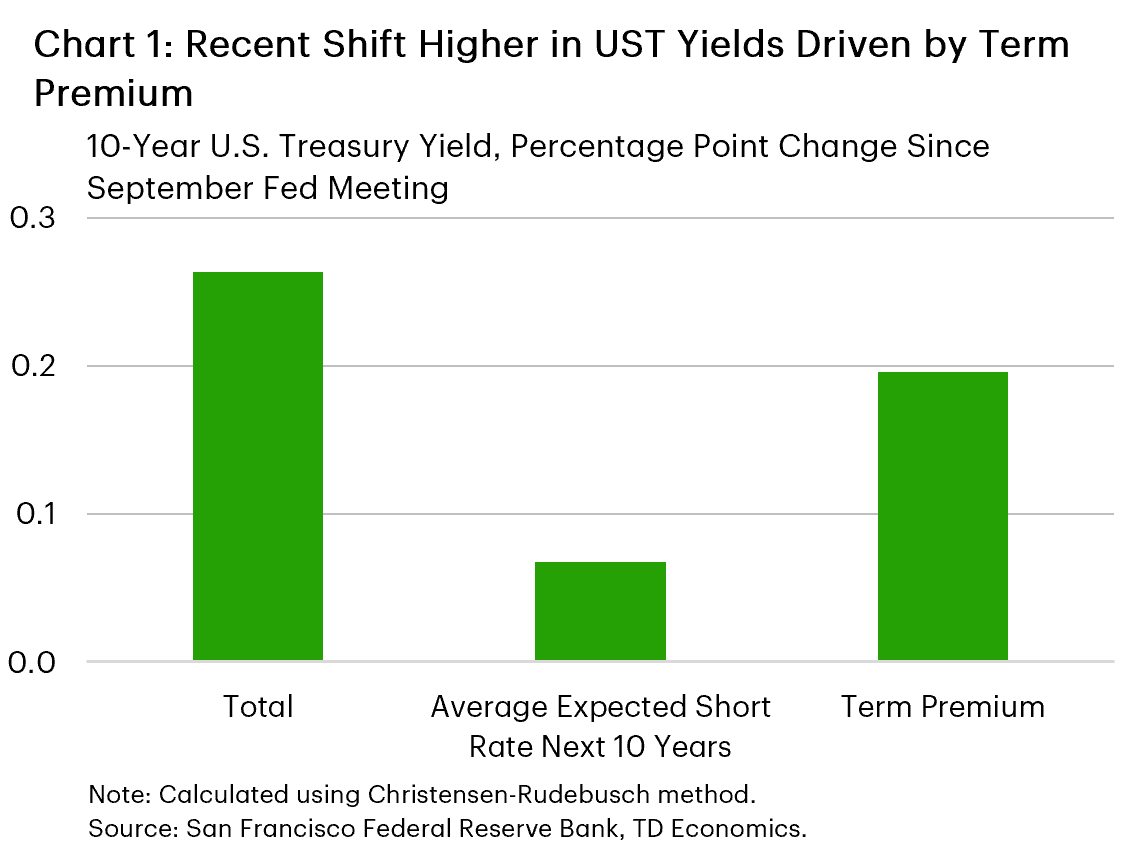
In credit markets, the march higher in global government bond yields eased over the past week. While concerns regarding the confluence of high national debt levels and higher for longer interest rates remain, U.S. Treasury auctions for 10-and 30-year bonds showed that investor demand remained healthy in the primary market. Given that most of the uptick in U.S. Treasury yields since the Federal Reserve’s September meeting has been a function of the risk premium (Chart 1) – the additional compensation demanded by investors to hold federal government debt – this development helped to alleviate some of the pressure on the U.S. Treasury market.
In terms of the economic data that we did receive this week, the advance estimates for international trade in August showed that the U.S. trade deficit widened to its highest level since March 2025 – the period that saw significant front-loading of imports in advance of the implementation of global tariffs. Surging imports of AI-related products continued to be the central catalyst of this trend, which more than offset the boost to nominal exports from higher energy prices. Elsewhere, the ISM Services index showed that service-based businesses continued to expand in September, albeit at a slower pace. Notably, the prices paid index hit its highest level since July 2022, illustrating the sustained pressure on input costs for businesses.
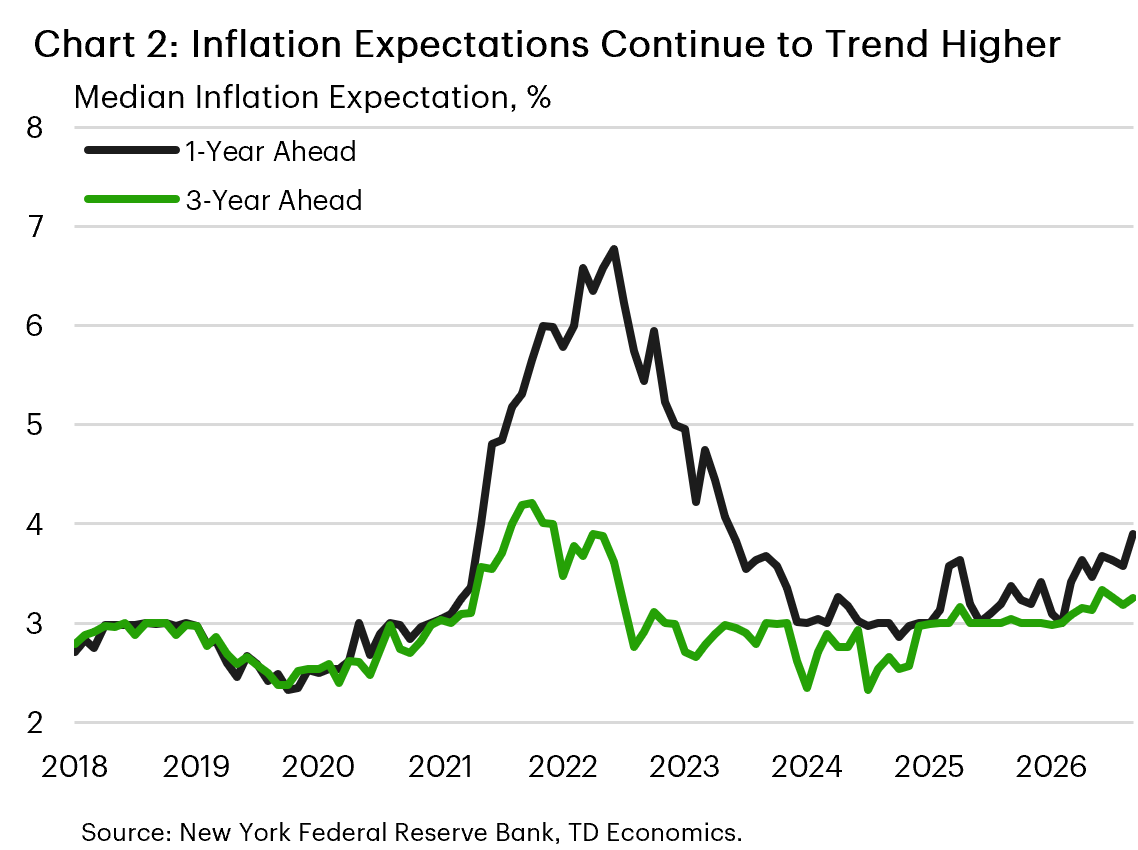
This remains a concern for the Federal Reserve, as noted in the release of the September meeting minutes this week. Committee members cited several risks to the inflation outlook, including persistent core inflation, higher energy prices, significant investment activity related to AI, and possible tariff increases. Consumers appeared to be of a similar mind, with the median 1-year ahead expectation for inflation hitting its highest level in over three years in September – just under 4% (Chart 2).
We’ll get a first look at September inflation next week when the CPI report is released on Wednesday. Consensus expectations are calling for an acceleration in total inflation, but a modest deceleration in core inflation in terms of the monthly change. If the data comes in as expected, then it will likely confirm market expectations for the Fed to refrain from raising rates at their next meeting at the end of the month. However, a material upside surprise could put the meeting back in play for a hike, with the overall bias of the FOMC remaining cautiously hawkish.
Andrew Foran, Economist | 416-350-8927
This Financial News report is provided by TD Economics. It is for informational and educational purposes only as of the date of writing and may not be appropriate for other purposes. The views and opinions expressed may change at any time based on market or other conditions and may not come to pass. This material is not intended to be relied upon as investment advice or recommendations, does not constitute a solicitation to buy or sell securities and should not be considered specific legal, investment or tax advice. The report does not provide material information about the business and affairs of TD Bank Group and the members of TD Economics are not spokespersons for TD Bank Group with respect to its business and affairs. The information contained in this financial news report has been drawn from sources believed to be reliable but is not guaranteed to be accurate or complete. This report contains economic analysis and views, including about future economic and financial markets performance. These are based on certain assumptions and other factors and are subject to inherent risks and uncertainties. The actual outcome may be materially different. The Toronto-Dominion Bank and its affiliates and related entities that comprise the TD Bank Group are not liable for any errors or omissions in the information, analysis or views contained in this report, or for any loss or damage suffered. Do you have any questions about your finances? As financial advisors in Cornelius NC, Naples FL, and Moultonborough NH we are happy to help.
To see more news reports, click here.